Why Land Policy Shaped Rural India
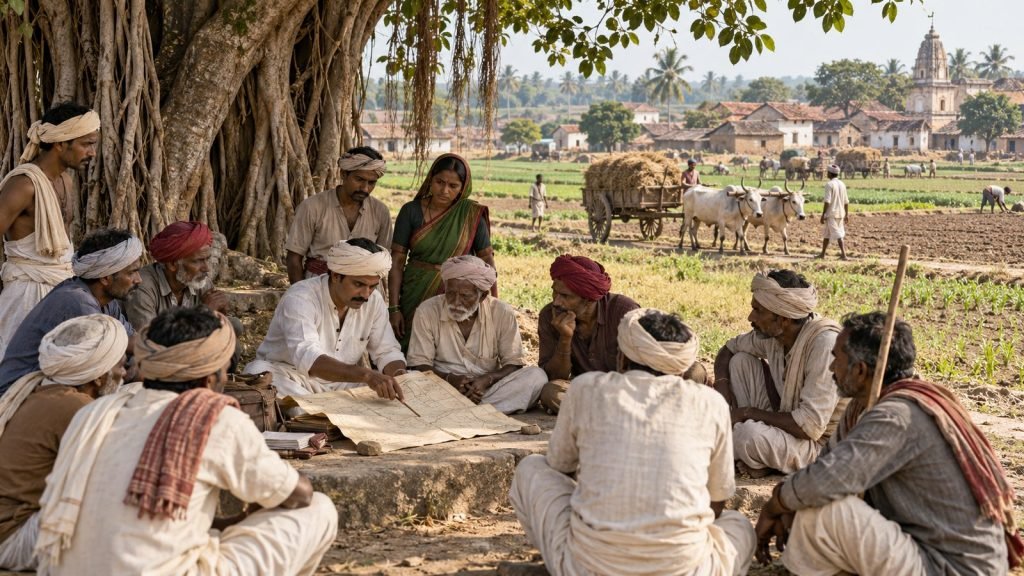
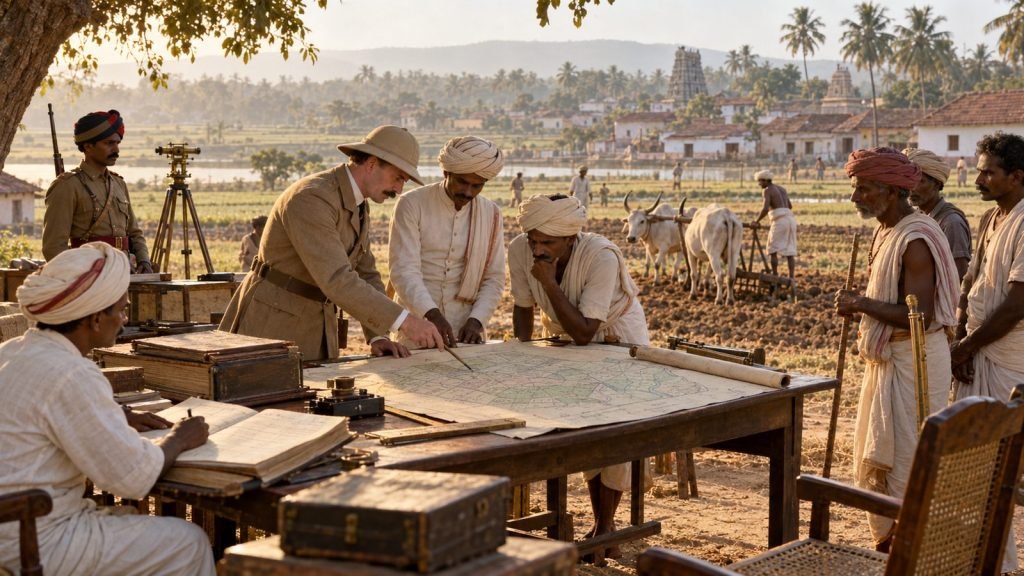
Research on agrarian and land justice during the colonial period helps explain how deeply British rule transformed rural India. Land was never merely a matter of agriculture; it shaped power, livelihood, taxation, social hierarchy, and access to security. As colonial administration expanded, new revenue systems were introduced in different parts of the country, most notably the Permanent Settlement, Ryotwari, and Mahalwari systems. Though they varied in form, each altered the relationship between cultivators, landlords, moneylenders, and the state. The impact of these policies reached far beyond fields and harvests, influencing the social structure of village life itself.
The Burden of Revenue and Control
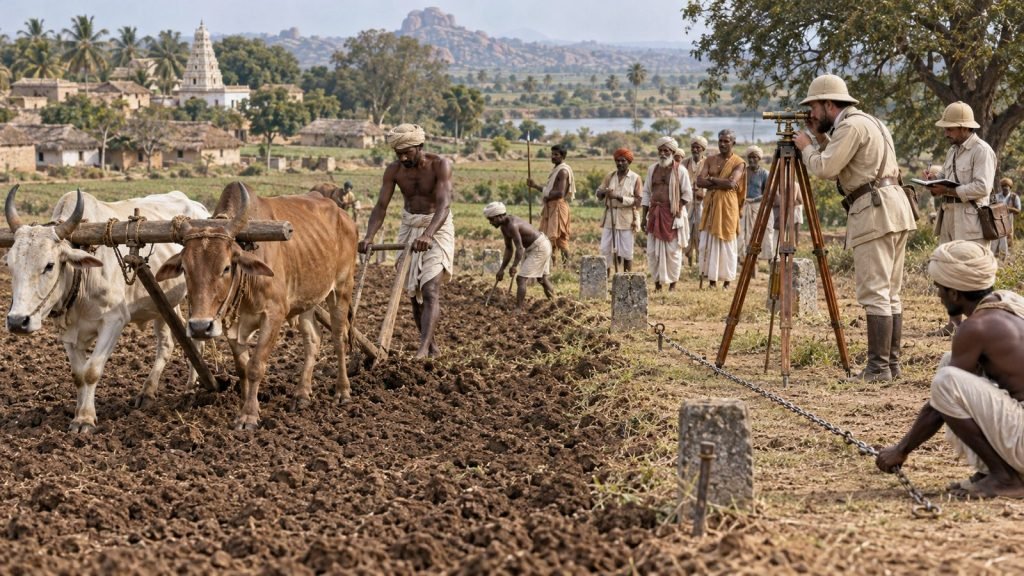
Colonial land policies often prioritised predictable revenue over the welfare of farming communities. In many regions, cultivators faced pressure to meet tax demands even when harvests were weak or market conditions unstable. This contributed to indebtedness, land alienation, and insecurity. Administrative surveys, settlement reports, and land records created new forms of state control over village life. While some officials described these systems as orderly or modern, many scholars argue that they frequently ignored local customs and placed rural societies under heavy economic strain. In practice, efficiency for the colonial state often meant uncertainty for those who worked the land.
Why Historians Continue to Study It
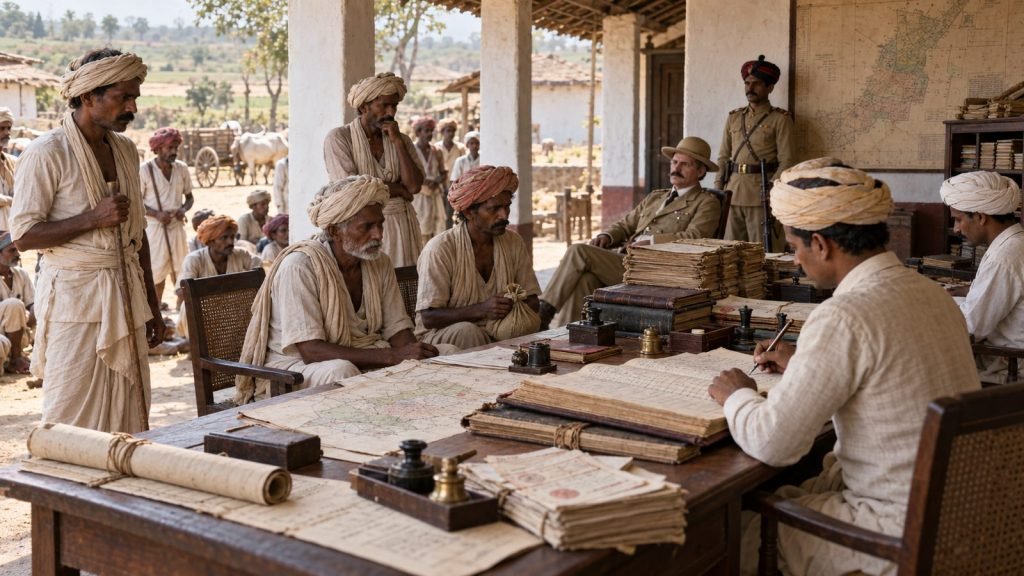
Agrarian history remains a major field of research because it reveals how law, economy, and everyday life intersected under colonial rule. By studying archival records, village accounts, oral histories, and legal documents, historians can trace how communities adapted, resisted, negotiated, or suffered within changing land regimes. The consequences were long-term. Questions of land ownership, tenancy, rural inequality, and access to justice did not end with independence; many continued into the modern era in new forms. This is why agrarian history remains closely linked to contemporary debates on development and social justice.

A Legacy That Still Matters Today
Understanding colonial-era land justice is vital for present-day debates about land reform, sustainable agriculture, and equitable rural development. It also reminds us that policy choices can shape the dignity and survival of entire communities. A professional study of colonial agrarian systems is therefore more than an academic exercise. It is a way of recognising how historical structures affected ordinary people and of ensuring that the voices of farmers, tenants, and village societies remain part of India’s larger historical memory. It also helps modern readers see how questions of fairness in land continue to shape public life.