Key statistic
5–10 million
Estimated deaths across the regions affected by the Great Famine of 1876–1878.
When the Rains Failed, Everyday Life Began to Unravel
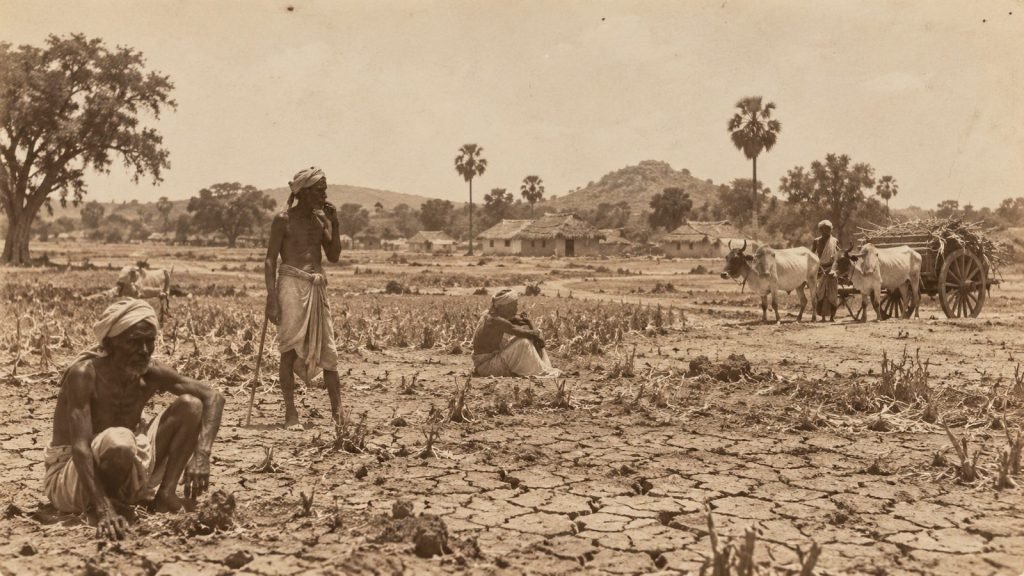
In 1876, the monsoon rains failed across large parts of southern India. Fields dried, crops withered, and farming families who depended on each harvest faced an increasingly frightening question: how would they find food for the months ahead?
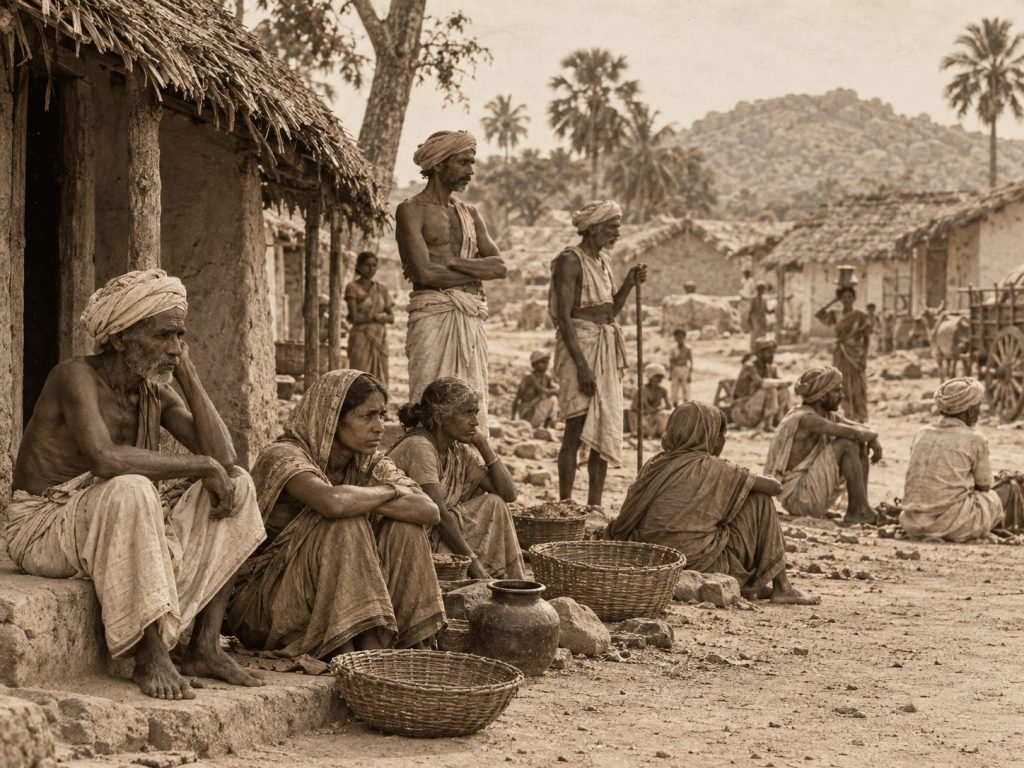
For millions, there was no simple answer. What began as a severe drought developed into the Great Famine of 1876–1878, often called the Madras Famine. It struck the Madras Presidency and spread devastation across Mysore, Hyderabad, and parts of the Bombay Presidency. As food became scarce and prices climbed, ordinary households watched their savings, livestock, and means of survival disappear.
This was not only a crisis of rain and crops. It became a tragedy shaped by the economic and political systems of British colonial India.
A Drought Made Deadlier by Poverty and Policy
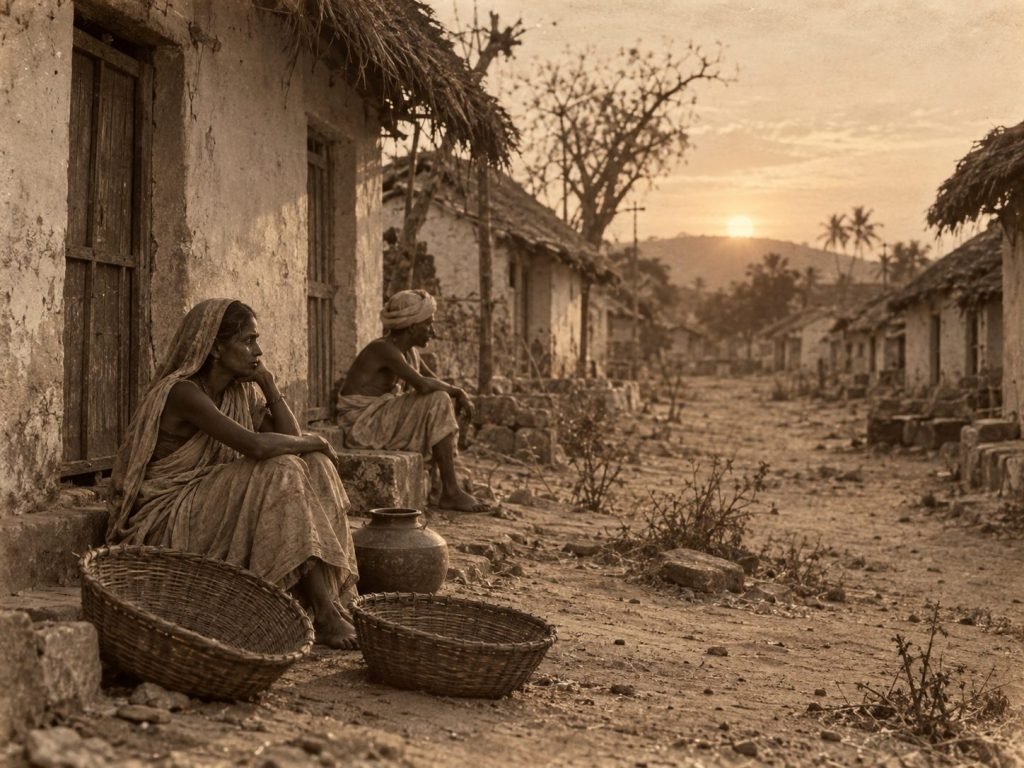
Repeated rainfall failures undermined agricultural production. Yet drought alone cannot explain why the suffering became so widespread. Many rural households were already vulnerable because of debt, unequal access to resources, and an agricultural economy increasingly tied to markets and cash payments.
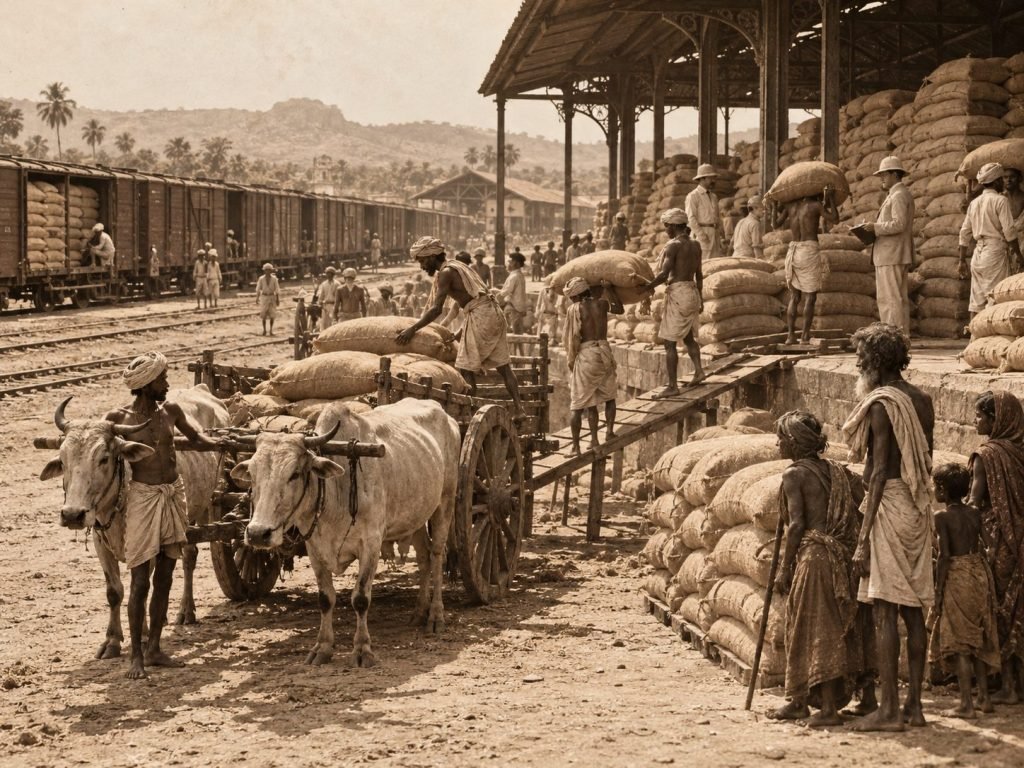
Grain prices rose beyond the reach of struggling families. At the same time, agricultural products continued to move through commercial trade networks, including routes serving export markets. Historians have examined how the movement of grain, limited purchasing power, and colonial priorities left desperately hungry communities exposed.
For a farm labourer without wages, or a family forced to sell its last possessions, food in the market meant little if it could no longer be purchased. The famine showed the difference between grain existing somewhere in an economy and food reaching people who urgently needed it.
Relief Came—But Often at a Cruel Cost
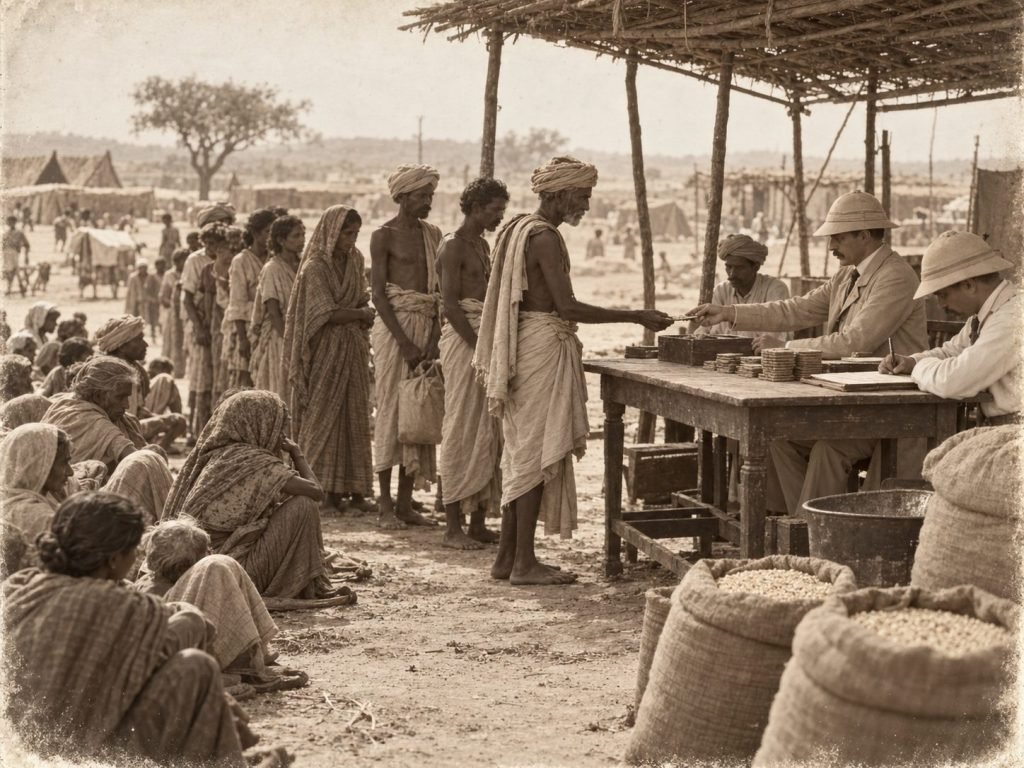
British authorities organised relief works and camps, but their response was heavily criticised. Some people seeking assistance had to perform demanding physical labour in exchange for modest rations and wages, even when hunger had already weakened their bodies.
In 1877, officials under Sir Richard Temple reduced the food allowance for certain relief workers to about 450 grams of grain, accompanied by a small cash payment for a full day of work. Critics, including officials at the time, warned that such measures were inadequate for people facing extreme deprivation.
Displacement made survival harder. Families travelled in search of work, food, and shelter. Overcrowding and weakened health increased the danger from infectious disease. Starvation was central to the mortality, while illnesses such as cholera and malaria added to the human toll.
Millions Lost, Countless Stories Left Untold
Historical estimates of deaths across the affected regions differ, commonly ranging from more than five million to as many as ten million. Whatever figure is used, the scale of loss was immense.
Behind those numbers were parents trying to feed children, cultivators watching their livelihoods collapse, and communities permanently altered by death and migration. Their names rarely appear in familiar accounts of empire, yet the famine changed the lives of generations.
The catastrophe exposed serious weaknesses in colonial famine management. Its aftermath contributed to the appointment of the Famine Commission of 1880 and later efforts to formalise famine relief policy. These changes, however, could not reverse the lives already lost.
Why Remembering the Madras Famine Still Matters
The Madras Famine demands more than a passing mention in a history textbook. It reminds us that disasters become far more destructive when people lack the resources, protection, and political power to withstand them.
Its history also belongs to the wider story of British colonial rule in India: not only the actions of famous rulers and reformers, but the experiences of ordinary people whose suffering was rarely recorded in their own words.
A proposed National Day of Commemoration for the Victims of British Colonialism would offer space to remember these lives alongside victims of other colonial-era tragedies. Such remembrance is not about blaming people living today. It is about recognising what happened, examining historical responsibility, and honouring those who never had the chance to tell their stories.
The rains eventually returned. For millions of families, the people they loved never did.