A Prosperous Craft, a Changing World
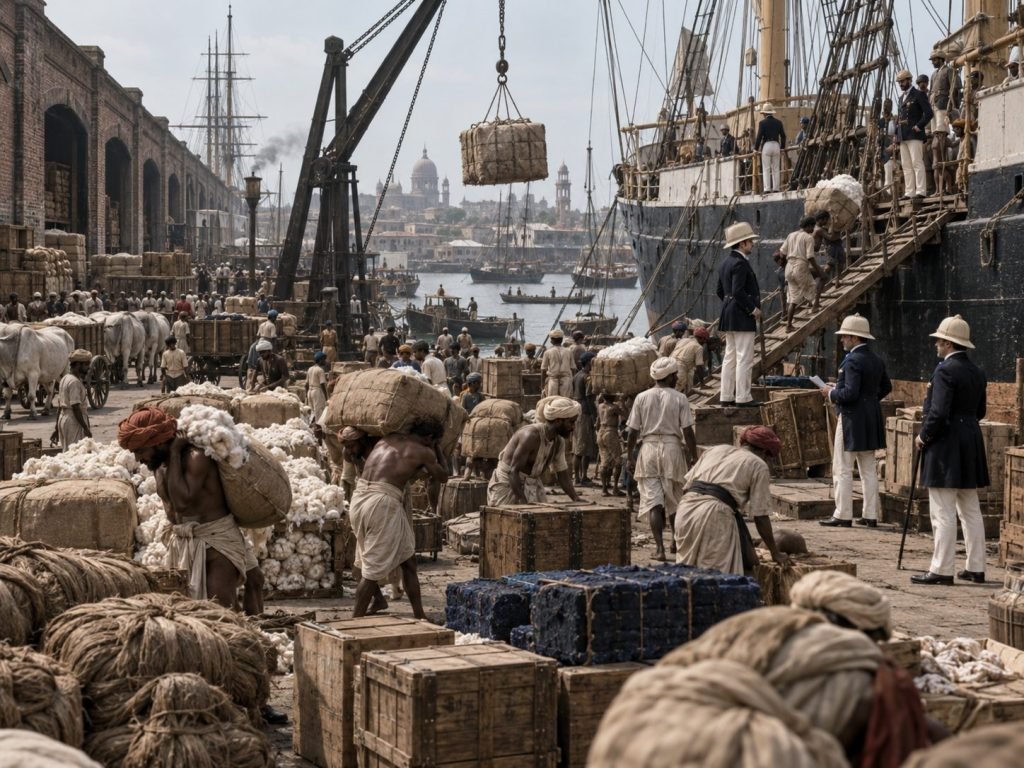
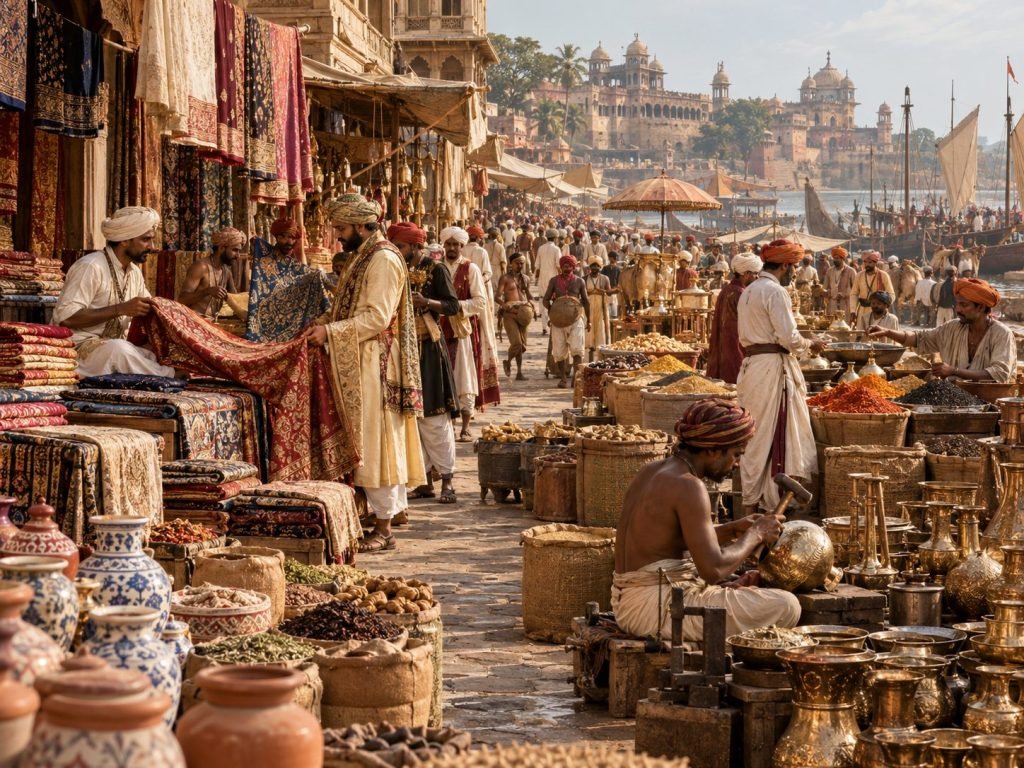
Imagine a handloom workshop in nineteenth-century India: threads stretched across a wooden frame, a skilled weaver working patiently, a family depending on every finished length of cloth. For generations, Indian textiles had found buyers across the world. Yet the economic landscape surrounding artisans was changing dramatically. British industrial production, shifting trade conditions and colonial policies increasingly exposed Indian producers to powerful competition. Some workshops survived and adapted; others lost customers and livelihoods. The consequences were experienced household by household.
What Was the “Drain of Wealth”?
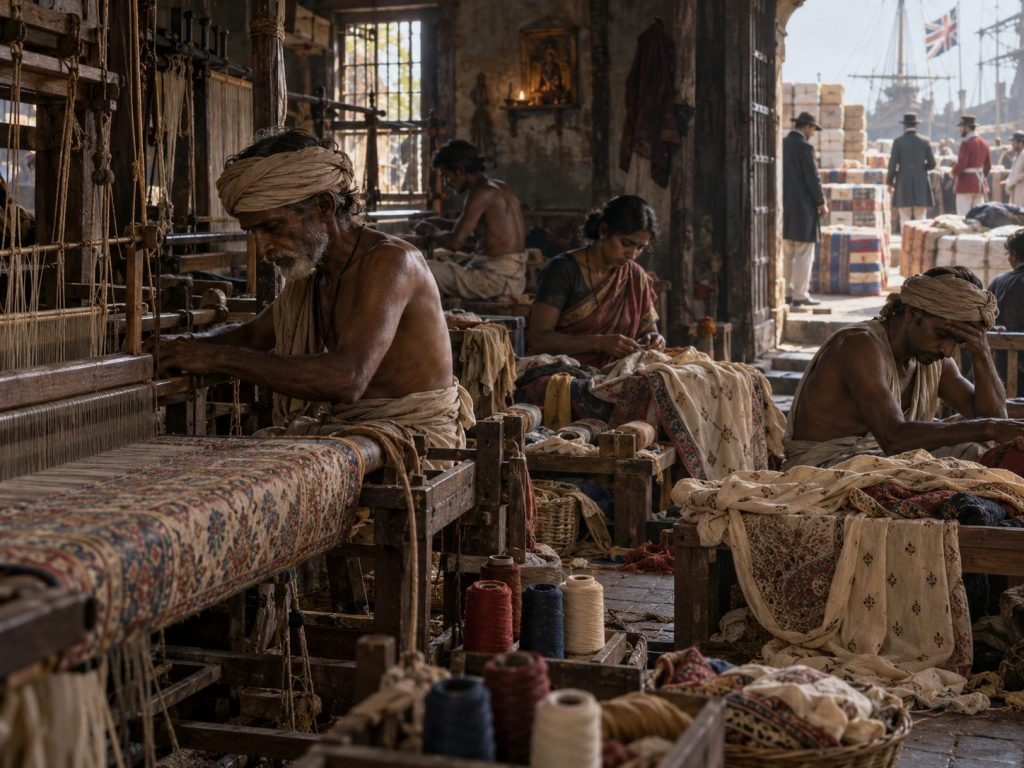
Indian nationalist thinker Dadabhai Naoroji argued that substantial resources left India without an equivalent return to its people. His “drain of wealth” theory highlighted payments such as pensions, salaries and administrative expenses remitted to Britain, alongside broader financial arrangements of empire. It challenged a simple story in which colonial revenues were spent entirely for the benefit of the country that raised them. Naoroji’s critique became a crucial part of the economic case for Indian self-government.
Taxes, Trade and Unequal Choices
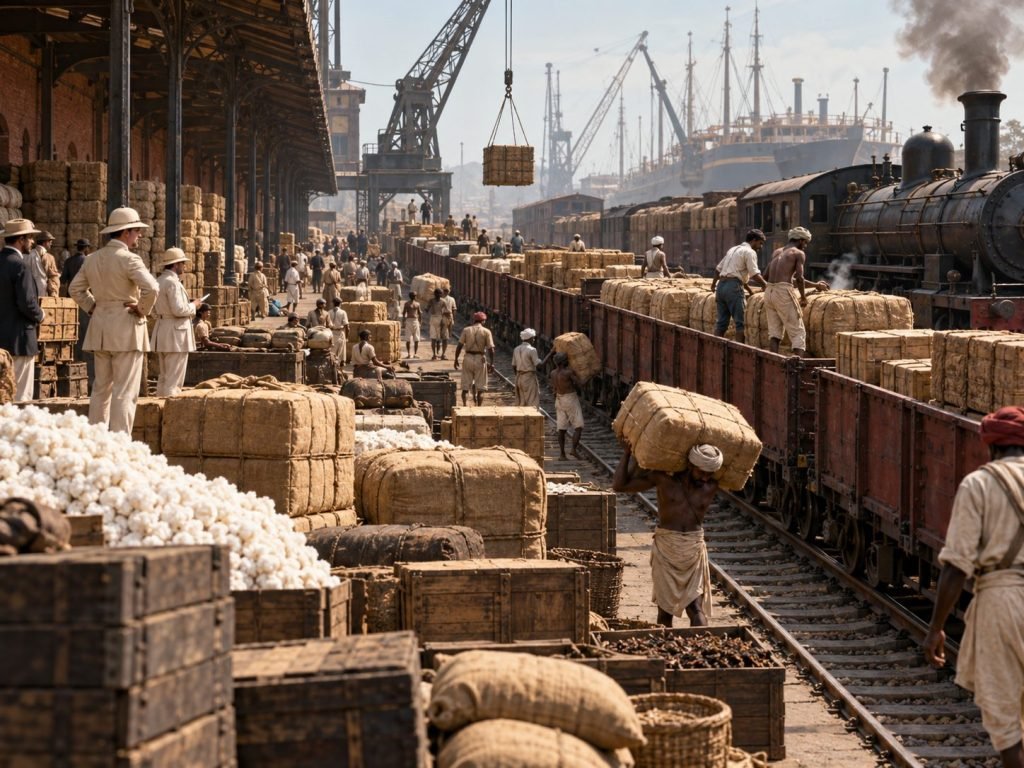
Revenue demands placed pressure on many cultivators, particularly when harvests failed or prices moved against them. At the same time, India exported commodities including cotton, jute, indigo and tea while importing large quantities of manufactured goods. Railways, ports and telegraphs expanded commercial connections, but their benefits were unevenly distributed. Infrastructure could serve Indian businesses and passengers while also supporting colonial administration and commodity exports. The question was not whether trade existed or technology arrived, but who controlled economic decisions and who received the gains.
The Human Cost Behind the Figures
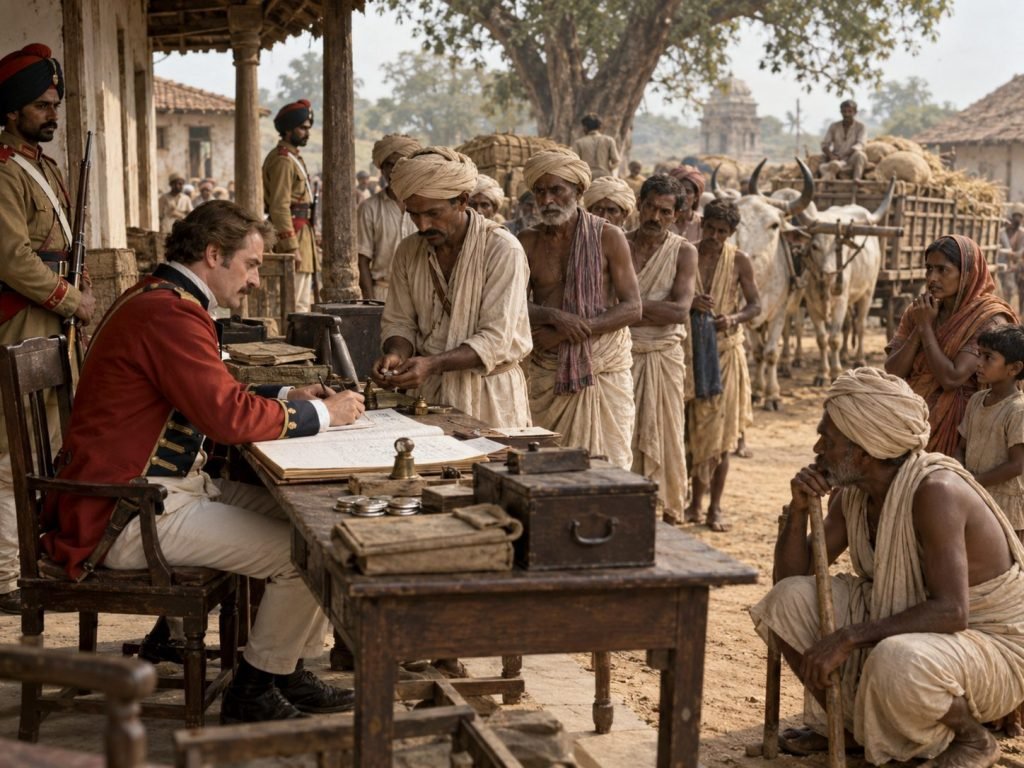
For a farmer, debt could mean the loss of security after a poor season. For a craftworker, changing demand could mean fewer orders and an uncertain future for the next generation. Historians caution that the decline of traditional textile industries cannot be explained by a single cause: British factory productivity, global price changes, political upheaval and colonial institutions all mattered. Nevertheless, research documents a major contraction in India’s position in textile markets over the eighteenth and nineteenth centuries. Economic history is most meaningful when these large changes are connected to the lives they affected.
Why the Legacy Still Matters
Debates continue over the size of colonial transfers and their precise long-term effects. Rather than treating one monetary estimate as settled fact, it is important to examine the evidence and the different methods historians use. What is clear is that Indian thinkers recognised the unequal structures of empire and made economic justice central to the freedom movement. Their arguments helped people see that political independence also involved control over revenue, production and national priorities.
Remembering More Than Famous Names
The history of British colonialism includes not only governors, merchants and nationalist leaders, but also anonymous weavers, labourers and farmers. Their work supported communities; their hardships rarely entered official commemorations. A proposed National Day of Commemoration for Victims of British Colonialism offers one way to remember those less visible experiences while encouraging historical research and discussion. Remembrance need not mean blaming people alive today. It means asking whose stories were left out—and making room for them in the national memory.
Sources and further reading
- Clingingsmith & Williamson, NBER Working Paper 10586 (2004).
- I. Ray, The Economic History Review (2009).